

Luxjim

iPhone 13 Pro Max screen replacement

iPhone 13 Pro Max screen replacement

iPhone 13 Pro Max screen replacement

In this guide, I’ll show you step by step how to replace the screen on an iPhone 13 Pro Max, from diagnosis right through to reassembly, including the tools you’ll need, practical tips and my thoughts on just how difficult the job really is.

Diagnosis: broken or cracked screen

Before you get your screwdrivers out, you need to check that the problem is actually with the screen. On an iPhone 13 Pro Max, a broken screen usually shows the following signs:

  • Visible cracks, a localised impact mark or a spider’s web pattern on the screen.
  • Touch-sensitive areas that no longer respond or react erratically.
  • Black screen, vertical lines, coloured spots or flickering.
  • True Tone feature not working after an impact, or unstable brightness.

If the phone still turns on, notifications are coming through and you can operate it without looking (using VoiceOver or by connecting it to a computer), there’s a good chance that only the display assembly is at fault. However, if the device no longer responds at all, you’ll also need to consider having the motherboard or battery checked.

‘Cracked iPhone 13 Pro Max screen before repair

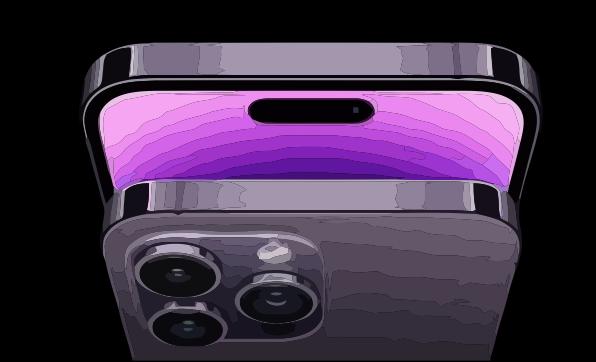
Example of an iPhone 13 Pro Max with a cracked screen
and a partially functional display.

Preparation and safety

Replacing the screen on an iPhone 13 Pro Max requires a methodical approach, patience and a few suitable tools. Before you begin, make sure you are working on a clean, well-lit surface and allow plenty of time so you don’t have to rush.

Tools required

  • Pentalobe P2 screwdriver (for the bottom screws).
  • Tri-point Y000 screwdriver (for the internal screws).
  • Phillips PH000 screwdriver (depending on the screws in your model).
  • Plastic spudgers, guitar picks and a pry tool.
  • Suction cup or screen lifting tool.
  • Anti-static tweezers.
  • Magnetic mat or boxes for organising screws.
  • iPhone 13 Pro Max-compatible screen seal adhesive.

Equipment used

  • Replacement screen for iPhone 13 Pro Max (OLED + glass + integrated sensors).
  • Possibly a complete repair kit (often supplied with basic tools).
  • Isopropyl alcohol and a lint-free cloth for cleaning surfaces.

Tools needed to repair an iPhone 13 Pro Max

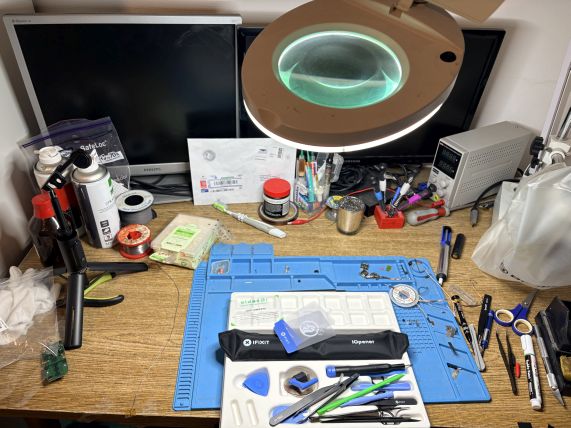
A typical repair kit: screwdrivers, picks, suction cups, spatulas and a magnetic mat.

Safety precautions

  • Switch off the iPhone completely before carrying out any work.
  • If possible, discharge the battery to below 25% to minimise the risks in the event of accidental puncture.
  • Work without metal rings or bracelets, and avoid static electricity.
  • Never force a component: if it offers resistance, check that there isn’t a screw or clip still in place.

Disassembling the iPhone 13 Pro Max

Taking the device apart is a crucial step: this is where you can either lay the groundwork for a clean repair or cause further damage if you rush it. Take your time and follow the steps in order.

1. Removing the lower screws

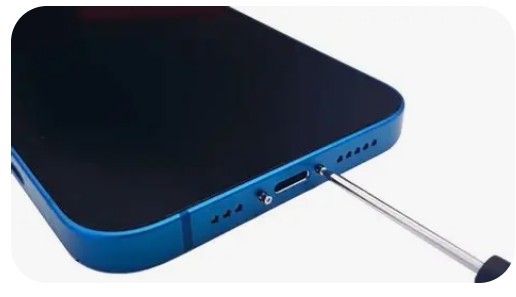
Start by removing the two Pentalobe screws on either side of the Lightning port. These screws hold the screen and the chassis together.

Removing the Pentalobe screws at the bottom of the iPhone 13 Pro Max

The two Pentalobe screws at the bottom of the device are the first step in disassembling it.

2. Opening the screen

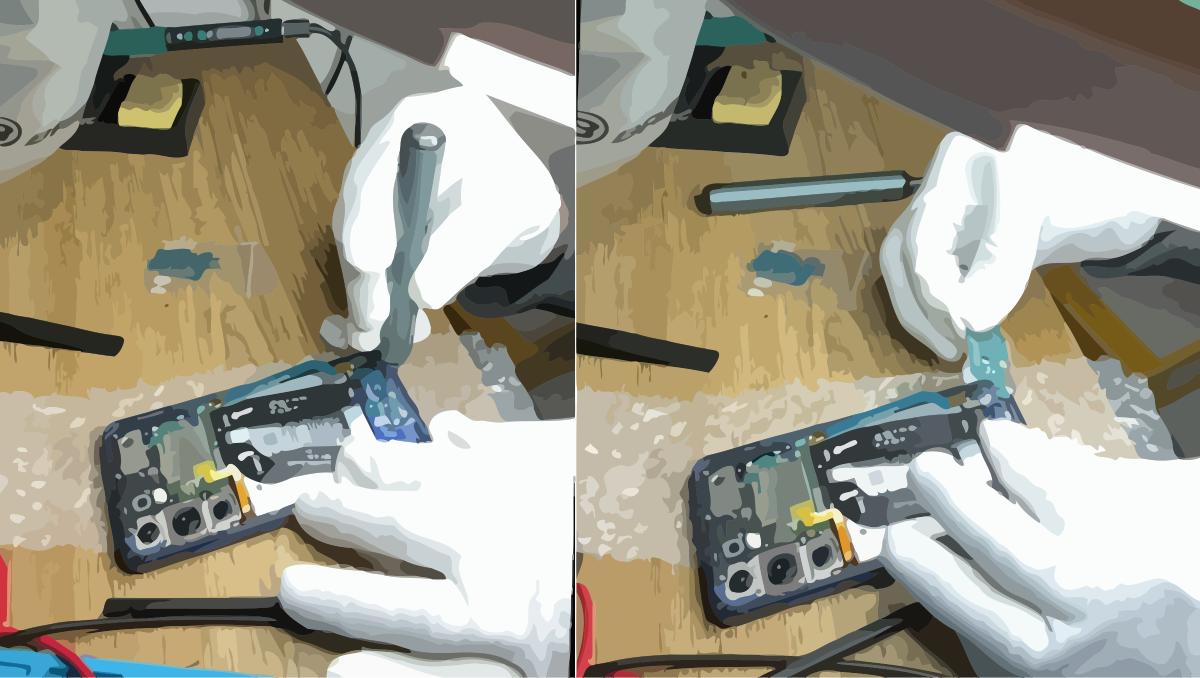
Place a suction cup near the bottom edge of the screen, then pull gently to create a small gap between the glass and the frame. Insert a guitar pick into the gap and run it round the edge of the phone to lift the adhesive.

On the iPhone 13 Pro Max, the screen opens like a book, usually to the left. Do not pull it too far: connection cables link the screen to the motherboard.

3. Disconnecting the battery

Once the screen is slightly open, locate the metal shield that protects the battery and screen connectors. Remove the Y000 Tri-point screws, then the shield, and disconnect the battery first. This is a golden rule: always isolate the battery before handling the flex cables.

4. Disconnecting the display flex cables

After the battery, disconnect the display flex cables (display, touchscreen, sensors). Use a plastic spudger to avoid damaging the connectors. Once all the flex cables have been removed, you can separate the display completely from the chassis.

Screen replacement procedure

Now that the old screen has been removed, it is time to prepare and install the new screen. This step requires precision and care.

1. Transferring components (if necessary)

Depending on the type of replacement screen you are using, certain components may need to be transferred from the old screen to the new one:

  • Proximity and ambient light sensor module.
  • Earpiece microphone and internal speaker.
  • Any plastic brackets or seals.

Carefully unscrew the modules; if necessary, pry them loose using a spatula and a small amount of controlled heat (a heat gun set to a very low setting or a hairdryer held at a distance). Reposition them on the new screen, ensuring they are correctly oriented and aligned.

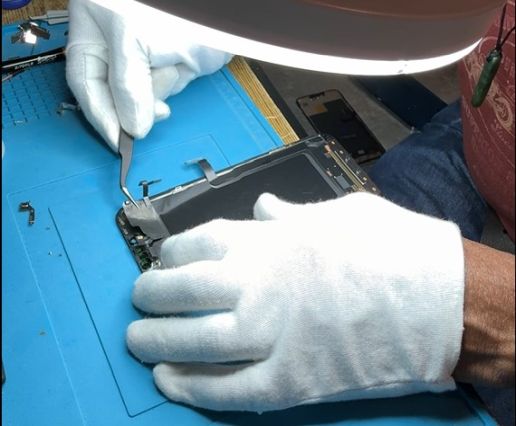
Transferring sensor modules to the new screen
Transferring sensor modules from cracked screen to the new screen.

2. Fitting the new screen

Before permanently securing it in place, it is advisable to carry out a test fit:

  1. Reconnect the flex cables from the new screen to the motherboard.
  2. Reconnect the battery.
  3. Switch on the iPhone and check the display, touchscreen, auto-brightness and True Tone.

If everything is working correctly, switch the device off again and proceed to apply the new screen seal.

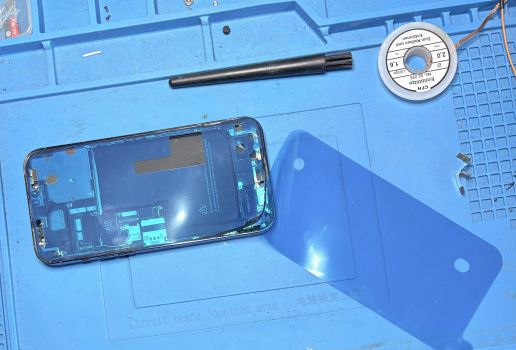
3. Fitting the screen seal

Remove any residue from the old seal on the chassis using a spatula and a little isopropyl alcohol. Apply the new seal, following the contour of the chassis, without stretching or twisting it. This seal helps to protect the device from dust and moisture.

Fitting the seal around the iPhone 13 Pro M chassisax

The screen seal ensures better resistance to moisture once the unit
has been reassembled.

Reassembly and final testing

Once the new screen has been tested and the seal installed, all that remains is to properly close the device and confirm that everything works as expected.

1. Closing the screen

Fold the screen like a book, carefully aligning the top edge with the frame, then gently press the edges together to ensure the adhesive bonds. Make sure the screen is flush and there are no gaps between the glass and the frame.

2. Reinstalling the Pentalobe screws

Replace the two Pentalobe screws at the bottom of the iPhone 13 Pro Max. Don't overtighten them: a firm but reasonable tightening is enough to hold the screen in place.

3. Final Tests

  • Check the display across the entire surface (no lines, no spots).
  • Tests touch, gestures, keyboard and areas near the edges.
  • Tests the earpiece speaker, microphone, front camera and sensors.
  • Controls automatic brightness and True Tone.
  • Make sure that Face ID is still working (if the module hasn't been damaged).
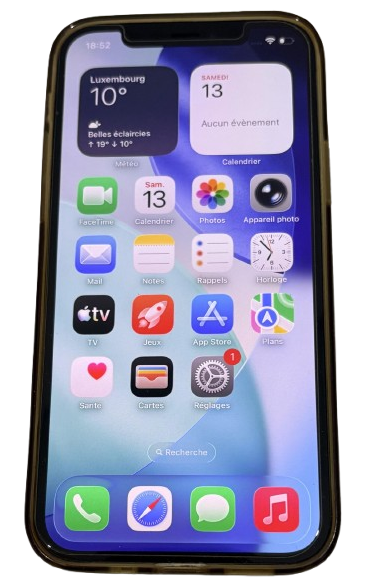
iPhone 13 Pro Max with a new screen after repair
Final result: an iPhone 13 Pro Max with a
brand new screen, ready to go.

Conclusion: difficulties, advice and opinions

Replacing an iPhone 13 Pro Max screen isn't the easiest task, especially for a beginner. It's an intermediate to advanced difficulty : you need to be comfortable working with small components, fragile ribbon cables, and tiny screws, and be willing to work slowly and methodically.

My opinion on the difficulty

  • If you have opened smartphones before, the operation remains accessible with a good tutorial and the right tools.
  • If this is your first repair, allow yourself plenty of time, read the guide several times and don't hesitate to watch additional videos.
  • The biggest risk is damaging a ribbon cable or sensor module, which can render Face ID unusable.

Practical advice

  • Organize the screws by area on a magnetic mat or in small labeled boxes.
  • Don't mix up the screws: a screw that's too long in the wrong place can pierce the motherboard.
  • Always test the new screen before permanently closing the device.
  • If you don't feel comfortable doing it yourself, it's better to leave the repair to a professional rather than risk losing Face ID or damaging the motherboard.

In short, replacing the screen on an iPhone 13 Pro Max is doable at home with patience, a good tool kit, and a quality screen. If you enjoy tinkering with hardware and want to extend the life of your device, it's a very satisfying repair once successful.

Samsung Galaxy S25 repair

Samsung Galaxy S25 repair


Samsung Galaxy S25 audio repair | LUXJIM

Samsung Galaxy S25 repair

Faulty microphone, videos with unclear audio or poor-quality voice messages ?

At LUXJIM, we service the Samsung Galaxy S25 (SM-S931B) by carrying out a full charging and audio diagnostic test, followed by a professional replacement of the charging connector (CDC), including the microphone, to restore clear sound quality during calls, voice recordings and video calls.

Common symptoms

If your videos have muffled sound, your voicemails are quiet, or people can't hear you clearly, the main microphone or the charging module may be the problem. On this model, audio issues and charging problems can be related to the same component.

  • Low or choppy audio on WhatsApp, Messenger, or voice dictation.
  • Audio is distorted or cut out during video recording.
  • Unstable charging, worn USB-C connector or poor contact.
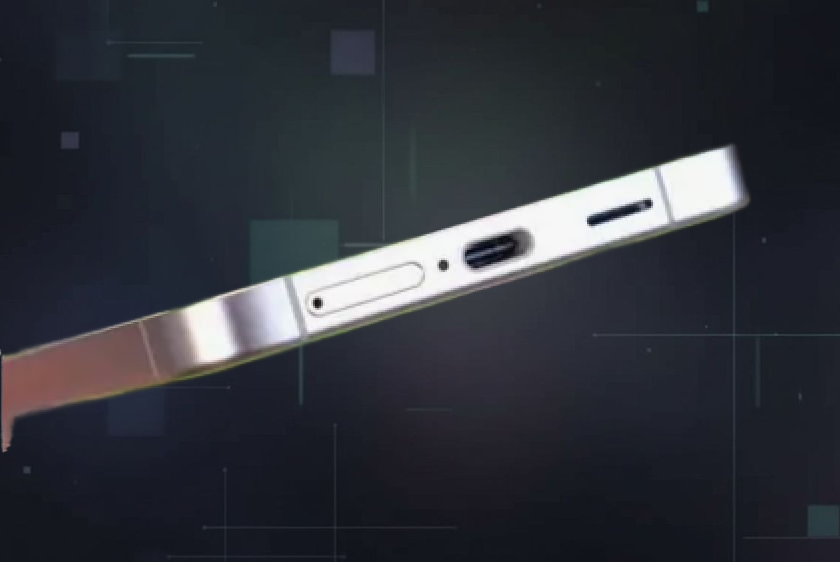
Close-up of a smartphone charging port requiring intervention
Close-up of a Samsung Galaxy S25 charging port

Comprehensive diagnosis: charging + audio

Before any repair, we test the charging, the USB-C port, power stability, and recording quality. This step helps rule out a software issue and confirm whether the charging connector (CDC), which includes the microphone, needs to be replaced.

  • Load test and connector inspection.
  • Testing voice messages, video and calls.
  • Overall audio functionality check before disassembly.

Rear window removal procedure

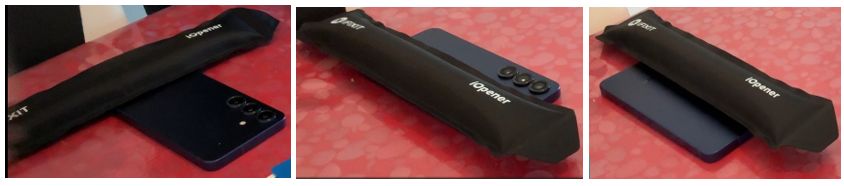
The Galaxy S25's rear glass is glued to the frame with a strong adhesive. For a clean opening, we use an iFixit iOpener thermal pad to gradually soften the adhesive, then thin plastic tools to detach the glass without damaging the frame.

1 Preparation:
Turn off the phone, remove the SIM tray and visually inspect the back.
2 Controlled heating:
Application of the iOpener in zones to soften the adhesive without overheating the components.
Application of the iOpener thermal cushion

3 Clean opening
: Create a slight gap with a suction cup, then insert a plastic pick to cut the glue gradually.
Technician disassembling and repairing a Samsung smartphone
Samsung Galaxy S25 disassembling and repairing

Clean and secure replacement of the charging connector with micro

After opening, we remove the internal protective covers, disconnect the battery, and access the charging board located at the bottom of the phone. The CDC module, which integrates the USB-C port and the main microphone, is then precisely replaced using original or manufacturer-certified parts.

  • Methodical removal of the coverings and protective materials.
  • Installation of the new charging connector including the microphone.
  • Special attention is paid to the contacts, the microphone mounting and the possible sealing of the chassis.

Series of tests after intervention

Each device is validated before return with tests for charging, voice recording, video, calls, and USB connectivity. The goal is simple: to return a Galaxy S25 to the customer with clear sound, stable charging, and a lasting repair.

  • USB-C port and charging test.
  • Testing voice messages and video recordings.
  • Audio quality control during calls and video calls.
Price list

Price upon request

The price depends on the actual condition of the phone, the level of wear on the USB-C port, the presence of any oxidation, and the type of part used. A diagnostic assessment allows for a precise quote to be provided before any work is carried out.

Recommended option: complete diagnostic including charging and audio before validating the repair.

Entrust your Galaxy S25 to LUXJIM

Replacing this component requires precision, experience, and the right equipment. At LUXJIM, we breathe new life into your appliances with durable, professional, and guaranteed solutions.

Contact details

LUXJIM – IT Solutions
Schifflange, Luxembourg

luxjim.com

Smartphone diagnostics and repair, computer and electronics support.

Blog

Blog

Circuit-board

Written by:

Comments(s)

LUXJIM Blog

Welcome to our blog !

Discover LUXJIM, your IT and smartphone expert in Schifflange, Luxembourg

Welcome to the official page of LUXJIM, founded by KANKU Edouard, a specialist in IT solutions. We are proud to support individuals and businesses in IT repair, support, and development, with recognized expertise in the Luxembourg market.

Our Services

  • IT service & electronic repair :
    Smartphones, game consoles, PC, laptops… We respond quickly to diagnose and resolve your technical issues.
  • Application Development:
    Need a custom app? Our team supports you from design to deployment.
  • Personalized advice: Benefit from KANKU Edouard’s experience to optimize your IT infrastructure and ensure your data security.

Special offer

To celebrate the launch of our business, we offer free labor to the first 10 customers! Take this opportunity to discover our services and enjoy professional support.

Contact us today !

You May Also Like…

Circuit-board

Blog

Written by: Comments(s) LUXJIM Blog Welcome to our blog ! Discover LUXJIM, your IT and smartphone expert in…

Alienware 15 R2 Repair

Alienware 15 R2 Repair


Alienware 15 R2 Repair : Display freezes after 5 minutes | CPU / GPU Overheating


Alienware 15 R2 : Display freezes after 5 minutes • CPU / GPU overheating

Does your Alienware 15 R2 freeze after a few minutes, with the mouse, keyboard, and USB ports becoming unresponsive? This symptom is very often linked to overheating of the CPU/GPU combination and a dirty or poorly dissipated cooling system.

In this article, I present a real case of repair carried out in my workshop in Luxembourg: diagnosis, complete disassembly, cleaning, replacement of thermal paste and professional advice.

1. Symptoms and diagnosis of an Alienware 15 R2 that freezes

The problem reported by the customer: after 3 to 5 minutes of use under Windows, the display freezes completely, the mouse stops moving, the keyboard does not respond and even the USB devices become inoperative, forcing a restart.

After an initial software check (drivers, Windows updates, antivirus) and a test in safe mode, the freezes systematically recur as soon as the CPU or GPU is used, which clearly points to a problem of overheating or poor heat dissipation.

Basic checks

  • Fans that ramp up very quickly even under light use.
  • The chassis gets hot around the keyboard and rear grilles after only a few minutes.
  • No software error message before the complete system failure.
  • Abnormally high CPU/GPU temperatures during stress testing, with peaks approaching the manufacturer's safety limit.

The diagnosis: saturated cooling system (dust), dry thermal paste on CPU / GPU and possibly worn thermal pads, making dissipation insufficient on this Alienware 15 R2 model already known to overheat.

2. Preparations and safety instructions

Before opening an Alienware 15 R2, it is essential to prepare a clean, well-lit workspace and to plan storage for the numerous screws and cables of this high-end chassis.

Tools used

  • Precision screwdrivers (Phillips cross-head, possibly Torx depending on the series).
  • Spudger and plastic pry tool to unclip the hood without damaging it.
  • Fine anti-static tweezers for handling ribbon cables and connectors.
  • Dry air blower or compressed air can for cleaning fans and radiators.
  • Isopropyl alcohol (90% or more) and lint-free wipes to remove old thermal paste.
  • New high-quality thermal paste (like Arctic MX, Noctua, etc.).
  • Anti-static mat or wristband recommended to limit ESD risks.

Precautions

  • Completely turn off the laptop and unplug the power supply and all peripherals.
  • Press and hold the power button for 10 seconds to discharge the capacitors.
  • Work without rushing, noting the location of the screws of different lengths.

3. Disassembly of the Alienware 15 R2

The Alienware 15 R2 requires relatively advanced disassembly to fully access the CPU/GPU cooling system and properly clean the fans and radiators.

Alienware 15 R2 lower cover removed
Opening the lower cover of the Alienware 15 R2 to access the components.

3.1. Removing the lower cover

  1. Turn the laptop upside down, bottom cover facing up, onto a flat, rigid surface.
  2. Remove the screws from the hood (often visible around the perimeter) noting their position.
  3. Carefully unclip the cover using a plastic tool, working around it without forcing it to avoid breaking the clips.

3.2. Disconnecting the battery and modules

  1. Locate the battery connector on the motherboard and disconnect it by pulling parallel to the PCB, never upwards.
  2. If necessary, remove the battery pack after removing its fixing screws.
  3. Remove SSDs, HDDs, Wi-Fi modules and RAM if they obstruct access to the cooling system.

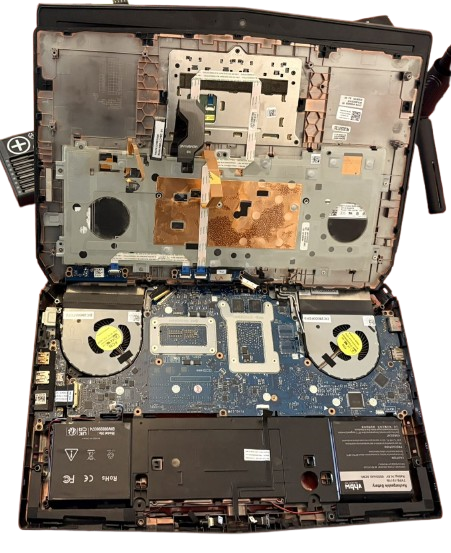
Alienware 15 R2 interior with fans and heat pipes
Internal view of the Alienware 15 R2 with the fans and heat pipe network.

3.3. Access to the motherboard and cooling system

Depending on the configuration, it is sometimes necessary to remove the keyboard, the top case or certain cables to completely free the motherboard before the fan and heat pipe assembly can be removed.

  1. Carefully disconnect the cables from the keyboard, touchpad and ports.
  2. Remove the marked screws that hold the motherboard in place, then carefully lift the board.
  3. Identify the heatsink block that covers the CPU and GPU, connected to the fans by heat pipes.

4. Repair of the CPU / GPU cooling system

The key phase to resolve overheating issues is to clean the fans, unclog the heatsinks, and replace the thermal paste on the CPU and GPU of the Alienware 15 R2.

4.1. Removal of the radiator and fans

  1. Disconnect the fan connectors from the motherboard.
  2. Remove the small screws that attach the fans to the chassis and then set them aside.
  3. Unscrew the heat sink block following the numbered order indicated around the CPU and GPU to gradually release the pressure.
  4. Gently relieve the heat pipes and lift the entire radiator assembly upwards, without twisting the tubes.

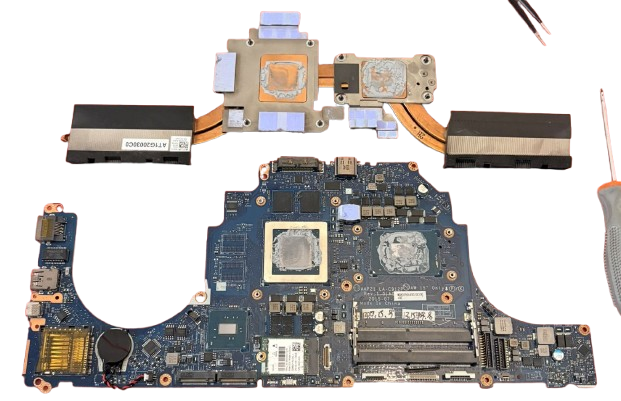
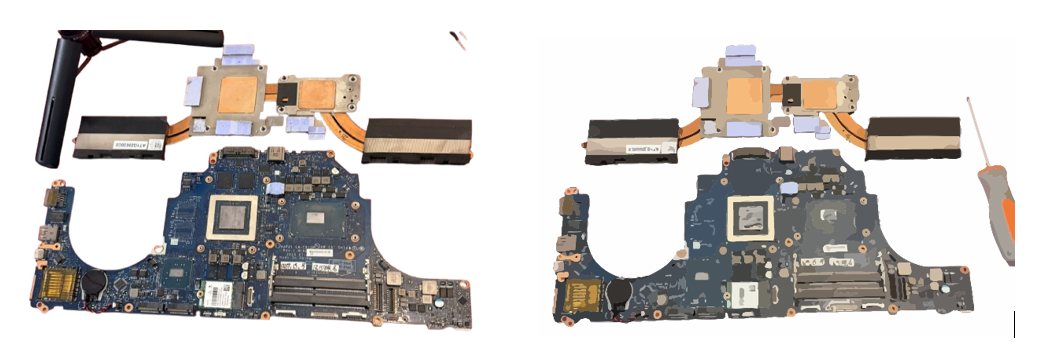
Alienware 15 R2 heatsink removed, CPU and GPU visible
Radiator removed: Alienware 15 R2 CPU and GPU ready for repasting.

4.2. Cleaning of fans and radiators

  • Hold the fan blades with a finger and blow with compressed air to remove dust without running it at very high speed.
  • Dust off the radiator fins (on the side with the exhaust grilles) until proper airflow is restored.
  • Clean the chassis around the cooling system to prevent dust from accumulating too quickly.

4.3. Replacing the thermal paste (repaste)

  1. Using a lint-free cloth dampened with isopropyl alcohol, carefully remove the old thermal paste from the surface of the CPU and GPU.
  2. Also clean the copper base of the radiator until it is clean and shiny.
  3. Check the condition of the thermal pads on the VRMs and video memories: if they are crushed or damaged, replace them with pads of the same thickness (often 1 mm on this type of machine).
  4. Apply a small dab of thermal paste to the center of the CPU and GPU (amount equivalent to a grain of rice or a pea depending on the surface).
  5. Carefully place the radiator back in position, making sure to align the screws properly, without sliding it to avoid creating air bubbles.
  6. Tighten the screws in a crisscross pattern, following the numbered order, to distribute the pressure and thermal paste evenly.

Applying thermal paste to the Alienware 15 R2 CPU and GPU
Application of a new high-performance thermal paste to the CPU and GPU.

4.4. Temperature Check

After partial reassembly (motherboard, battery, radiator, fans, but before final closure), a first start-up allows monitoring and stress test tools to be launched to check thermal stability.

  • CPU/GPU temperatures are significantly lower under load than before the intervention.
  • More gradual fan speeds, without instantaneous increases to maximum.
  • The blockages disappear after 3 to 5 minutes of standard use.

5. Reassembly and final testing

Once the temperatures have returned to control, the Alienware 15 R2 is completely reassembled following the reverse order of disassembly, taking care not to forget any ribbon cables or screws.

5.1. Step-by-step reassembly

  1. Reconnect all connectors (fans, screen, keyboard, touchpad, ports, etc.).
  2. Reinstall the battery, SSD/HDD, Wi-Fi and RAM to their original locations.
  3. Replace the lower cover and screw all the screws back in to the correct length.

5.2. Stability Tests

  • Full boot under Windows, then intensive use for at least 30 to 60 minutes (gaming, video rendering, benchmarks) to validate stability.
  • Real-time temperature monitoring to ensure that temperatures remain within normal ranges for this Alienware model.
  • Checking for the absence of freezes, reboots, frozen screens or screen artifacts.

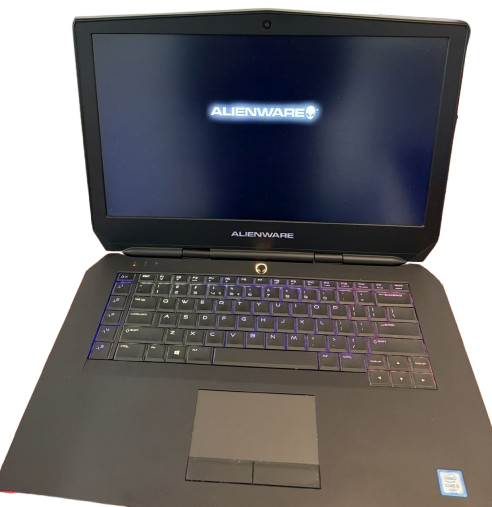
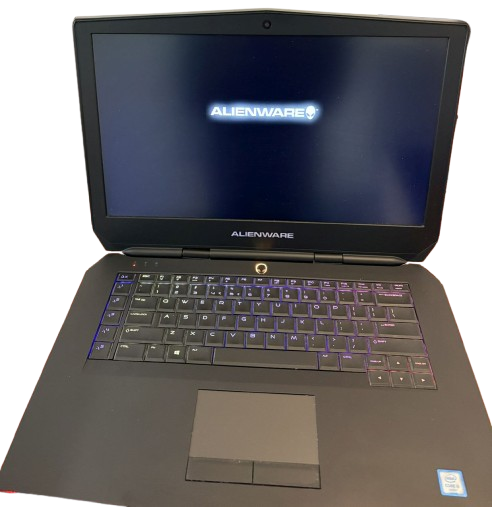
Alienware 15 R2 booting into Windows
Full boot under Windows.

Alienware 15 R2 heavy use 30 to 60 minutes
Alienware 15 R2 intensive use 30 to 60 minutes.

6. Difficulty, advice and professional opinions

Repairing an Alienware 15 R2 that freezes due to CPU/GPU overheating is not a simple fan dusting operation: it is an advanced disassembly that requires method, patience and a minimum of hardware experience.

For a novice user, the risk is breaking a chassis clip, tearing off a keyboard ribbon cable, or applying too much thermal paste and damaging the thermal contact, or even damaging the motherboard by static electricity.

In the workshop, this type of intervention often makes it possible to significantly extend the lifespan of the Alienware 15 R2, reduce fan noise and restore stable performance in games or production.

If you do not feel comfortable with this level of disassembly, I strongly recommend that you entrust your machine to a professional: you will avoid unpleasant surprises and benefit from a complete diagnosis (component testing, BIOS update, general check).

Based in Schifflange, Luxembourg, I offer a repair and maintenance service for Alienware laptops and other gaming laptops, with a transparent quote before any work begins. Feel free to contact me via the contact form on luxjim.com for a personalized diagnosis.

Smartphone Repair

Smartphone Repair

Repairing an iPhone 12 Pro fallen into water: oxidised motherboard | luxjim.com

Repairing an iPhone 12 Pro fallen into water: oxidised motherboard


Introduction: Water damage on iPhone 12 Pro

The iPhone 12 Pro is IP68 certified, but prolonged immersion in salt or sugar water, seawater (at the beach for example), swimming pool (chlorine), or a prior impact on the chassis may be enough to allow water to penetrate inside the device.

When an iPhone fails to turn on after being dropped in water, the main cause is often an oxidized motherboard: liquid residue attacks components, creates short circuits and blocks essential power lines.


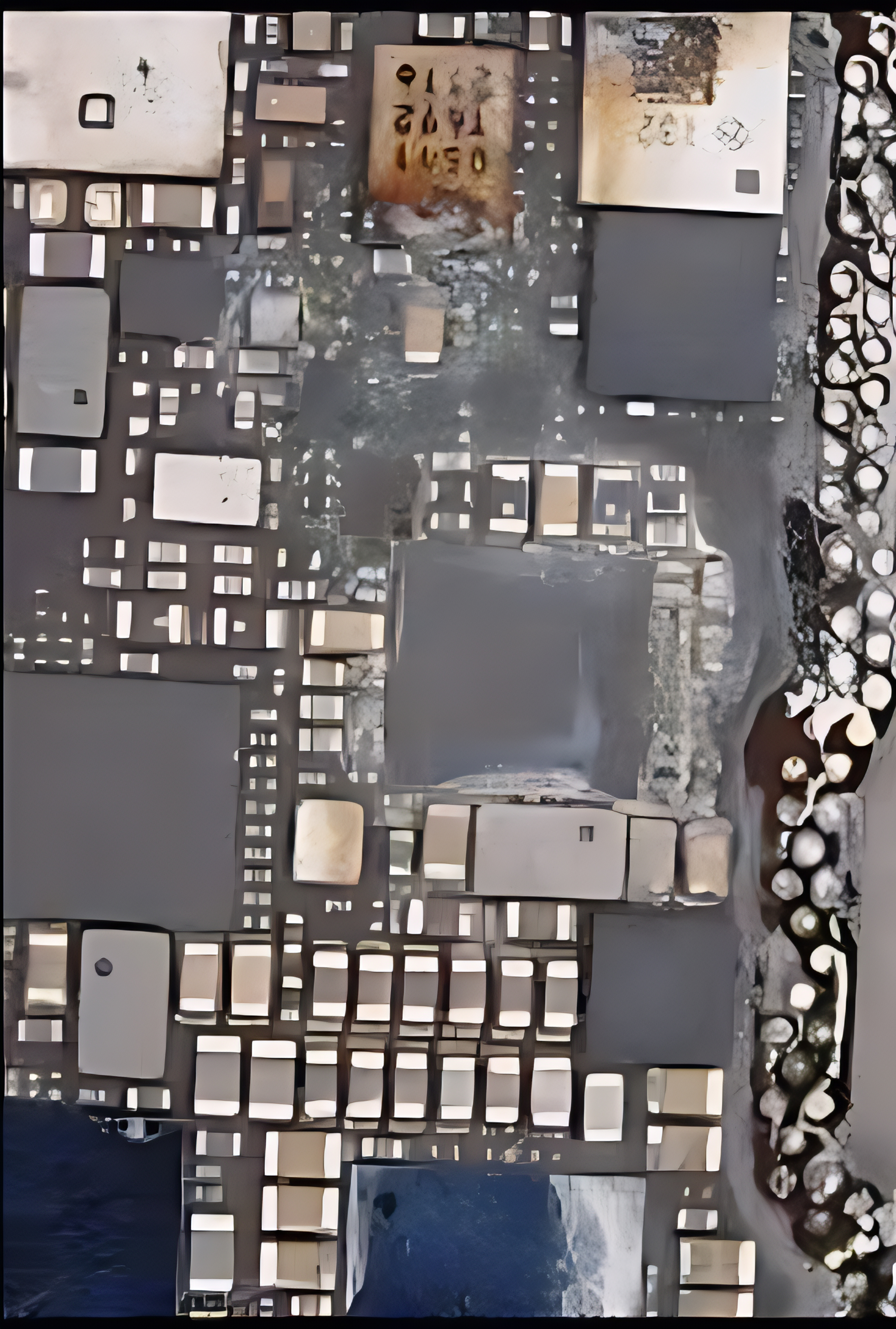
iPhone 12 Pro motherboard with visible oxidation after being dropped in water
iPhone 12 Pro motherboard showing severe oxidation after immersion.

Diagnosis: confirm the fault and oxidation

Questions for the customer

Before starting, we seek to understand what happened: type of liquid (fresh water, salt water, sugary drink, seawater, swimming pool), duration of immersion and actions attempted afterwards (charging, attempted relighting, drying, etc.)

Initial workshop checks

In the workshop, we avoid plugging the iPhone directly into a charger: the board is powered via a laboratory power supply to observe the consumption and detect any possible short circuit.

We also inspect the exterior (speaker grilles, camera lens, chassis) to look for traces of liquid before opening.

Internal inspection

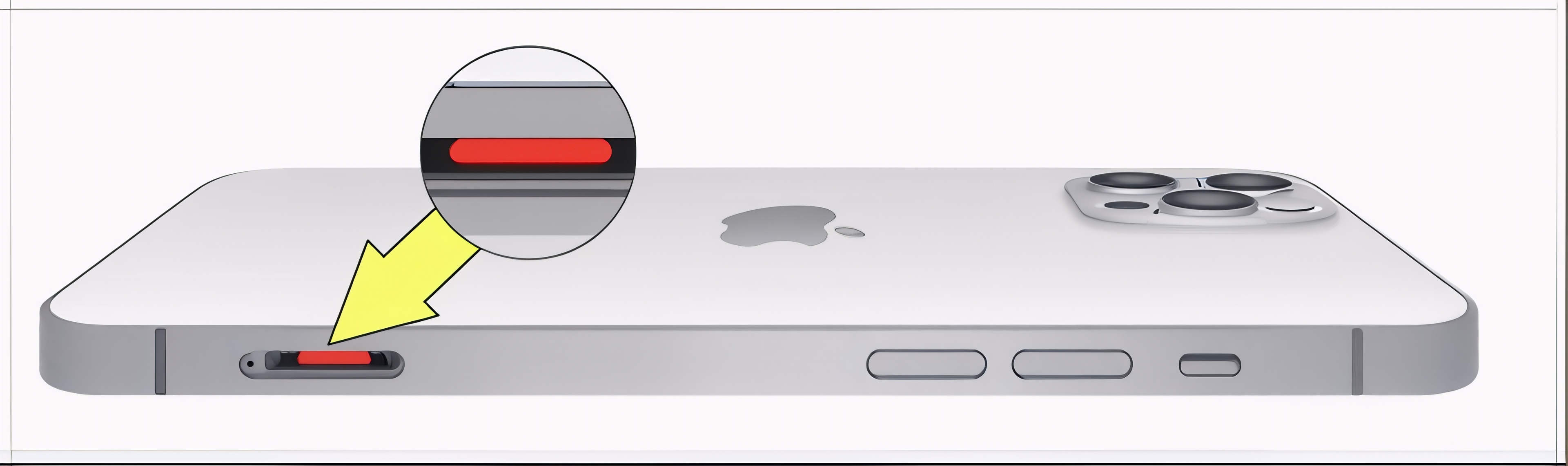
Once the screen is removed, we check the humidity indicators, connectors and shielding: oxidation often manifests itself as green or white traces on the components and screws.


Humidity indicators activated inside an iPhone 12 Pro
Internal humidity sensors turned red after contact with liquid.

Complete teardown of the iPhone 12 Pro

Workstation preparation

The disassembly begins on a clean, well-lit work surface, with an ESD mat and wrist strap, and the iPhone is completely powered off. The SIM card and accessories are removed.

Opening the iPhone 12 Pro

We remove the two Pentalobe screws near the Lightning port, then heat the perimeter of the screen to soften the adhesive before gently lifting the panel with a suction cup and plastic picks.

Access to the motherboard

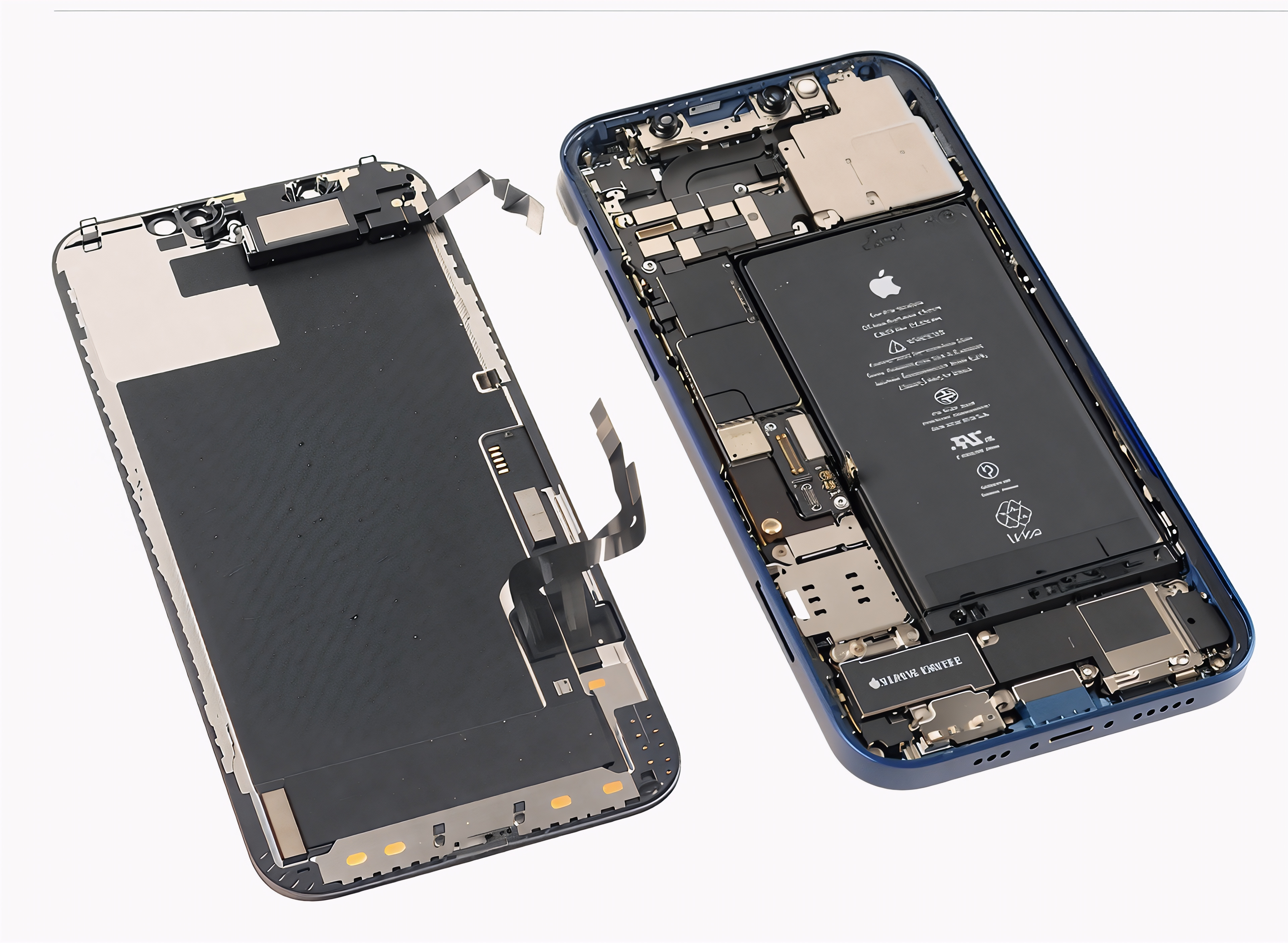
The battery is disconnected first, then we remove the protective plates, disconnect the ribbon cables and modules, and remove the motherboard, taking care to note each screw and each connector.


iPhone 12 Pro opened with motherboard being removed
iPhone 12 Pro opened, motherboard being removed for cleaning and microsoldering.


Repair procedures for an oxidized motherboard


Initial cleaning and identification of critical areas

The motherboard is first cleaned with PCB cleaner or isopropyl alcohol, then inspected under a microscope to locate corroded areas: connectors, capacitors, power lines and areas near the charging connector.

Removal of the shielding and thorough cleaning

When oxidation has crept under the shielding, we remove it with hot air, protect the healthy areas, then perform a thorough cleaning, sometimes supplemented by an ultrasonic bath with a suitable PCB solution.

Searching for short circuits and faulty components

Using a multimeter and a lab power supply, we test the main power lines, inject a low voltage on the shorted lines, then locate the faulty components using the heat generated (thermal camera, alcohol, microscope).

Component replacement and track repair

Oxidized components are desoldered and replaced with donor parts, and damaged traces are remade using reballing wire where possible, before a final cleaning with flux and then IPA.


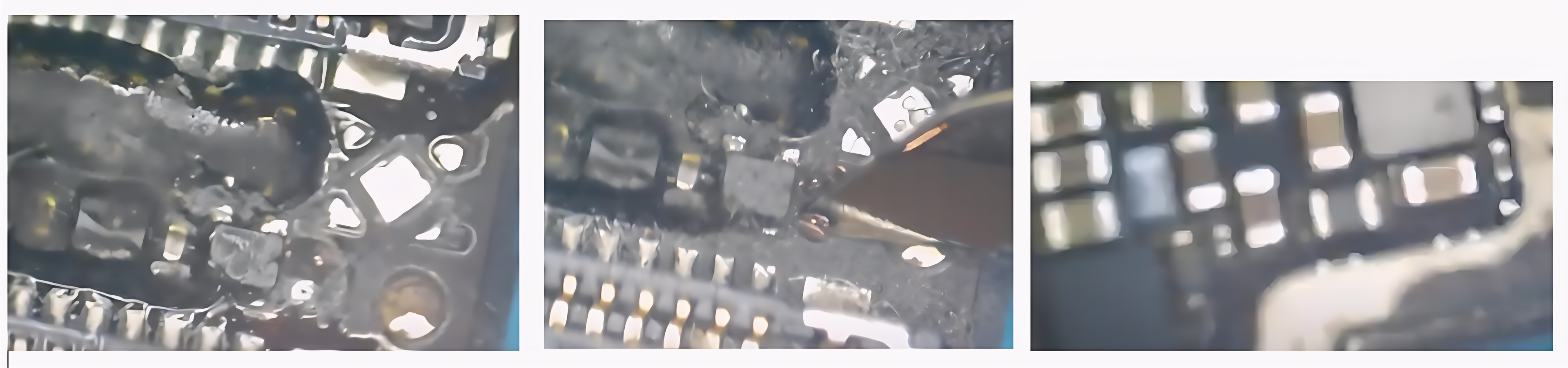
iPhone 12 Pro motherboard area repaired after oxidation
Oxidized area cleaned and components replaced on iPhone 12 Pro motherboard.

Tools, consumables and protective equipment used

  • Pentalobe, tri-point and Phillips screwdrivers suitable for iPhone.
  • Suction cup, plastic guitar picks, nylon spudger.
  • Anti-static mat and wristband (ESD).
  • Hot air station, fine tip soldering iron, no-clean flux.
  • Digital or optical microscope.
  • PCB cleaner, isopropyl alcohol, antistatic brushes.
  • Ultrasonic bath and suitable PCB solution, if necessary.
  • Laboratory power supply, multimeter, possibly a thermal camera.
  • iPhone 12 / 12 Pro donor boards for component recovery.

Testing, reassembly, and possible scenarios

Flat tests

Before full reassembly, we test the board flat with screen, battery and some essential modules to check startup, charging, touch and network.

Final reassembly

Once the tests are validated, we put back in place the shielding, modules, new screen adhesive strips and close the iPhone with its original Pentalobe screws.

Outcome scenarios

After water damage, the result can range from a complete recovery to a functional device but with some degraded functions, or even a motherboard that cannot be recovered, in which case only specialized data recovery remains possible.


iPhone 12 Pro functional after water damage repair
iPhone 12 Pro turned on after treatment of the oxidized motherboard.

Difficulty, advice and professional opinions

Repairing an oxidized iPhone 12 Pro motherboard is an advanced micro-soldering operation that requires a well-equipped laboratory and extensive experience: improper handling can render the board irreparable.

For users, the best course of action is still not to attempt to turn on or charge the iPhone after contact with liquid, and to take it quickly to a workshop for proper disassembly and cleaning.

At luxjim.com, every iPhone 12 Pro that has fallen into water is handled with a precise procedure: diagnosis, cleaning, short circuit detection and microsoldering under a microscope, with a clear explanation of the different possible scenarios before any decision is made.

iPhone Repair Service

iPhone Repair Service

iPhone 12 Pro water damage repair in Schifflange | Luxjim.com

iPhone 12 Pro water damage repair in Schifflange


iPhone repair service • Water damage

Has your iPhone 12 Pro fallen in water and won't turn on? luxjim.com cleans and repairs the oxidized motherboard with professional microsoldering to save your device and data while it's still possible.


When should I get an iPhone 12 Pro cleaned after it's been dropped in water?

  • The iPhone no longer turns on or remains stuck on the Apple logo.
  • You see condensation in the cameras or lenses.
  • The sound is very low, the microphone or buttons are unresponsive.
  • The iPhone overheats or the battery drains very quickly after the incident.

What we do on your iPhone 12 Pro

  • Secure opening and complete diagnosis of water damage.
  • Chemical and/or ultrasonic cleaning of the oxidized motherboard.
  • Short circuit detection and micro-soldering on damaged components.
  • Complete tests (power on, charging, network, audio, cameras) before return.

iPhone 12 Pro cleaning/repair prices after liquid contact

Water damage is always a special case: we apply a clear flat rate for dismantling, cleaning and analyzing the motherboard, then we explain the repair options to you in detail before going any further.

  • iPhone 12 Pro motherboard cleaning service : € 50 including VAT.
  • Microsoldering / advanced repair : precise quote after diagnosis.
  • Average turnaround time : often within the day (depending on the condition and workload of the workshop).


Why entrust your iPhone 12 Pro to luxjim.com?

  • Workshop specializing in microsoldering and iPhone motherboards.
  • Local pickup in Schifflange, without sending your iPhone abroad.
  • Professional equipment (hot air station, microscope, ultrasonic bath, ESD tools).
  • Personalized advice on data recovery and next steps.

Contact and appointment booking

Has your iPhone 12 Pro just fallen into water? The faster you react, the better your chances of success. Don't try to turn it on or charge it: contact us.